Drone installation
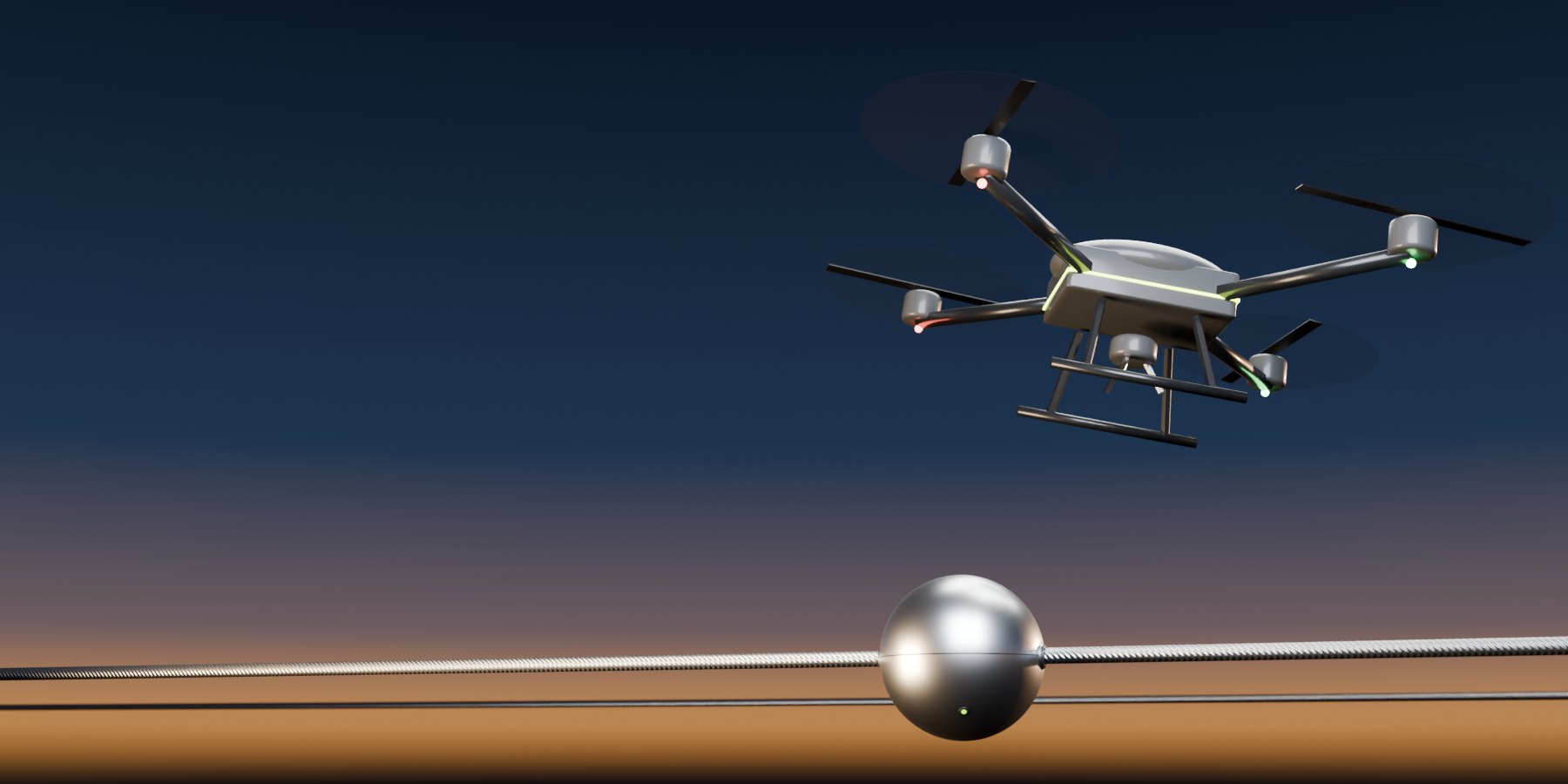
Mounted on energized lines by drone or hot stick. No outage, no customer interruption.
We build smart sensors for the power grid, artificial intelligence platforms and optimization solutions that turn distribution and transmission networks into observable, predictable and optimized systems.
What we do
A technology company for the power sector: we generate the missing data, build the intelligence that interprets it and deliver solutions that improve operation and planning.
Smart conductor-mounted sensors, self-powered and synchronized, for distribution and transmission.
02Event analysis, diagnostics and forecasting with machine learning, integrated with utility systems.
03Research and development projects with utilities: models, algorithms and tools tailored to real grid problems.
Why now
Distributed generation, renewables and electrification made power flows volatile and bidirectional. Yet most feeders and lines are still measured only at the substation.
Between substations lie kilometers of network with no measurement at all. That is where faults, losses and overloads happen.
Conventional metering requires outages, cabinets, CTs, VTs and communication infrastructure at every point.
Even where sensors exist, data volume and field communications limit what actually reaches the control room.
The device
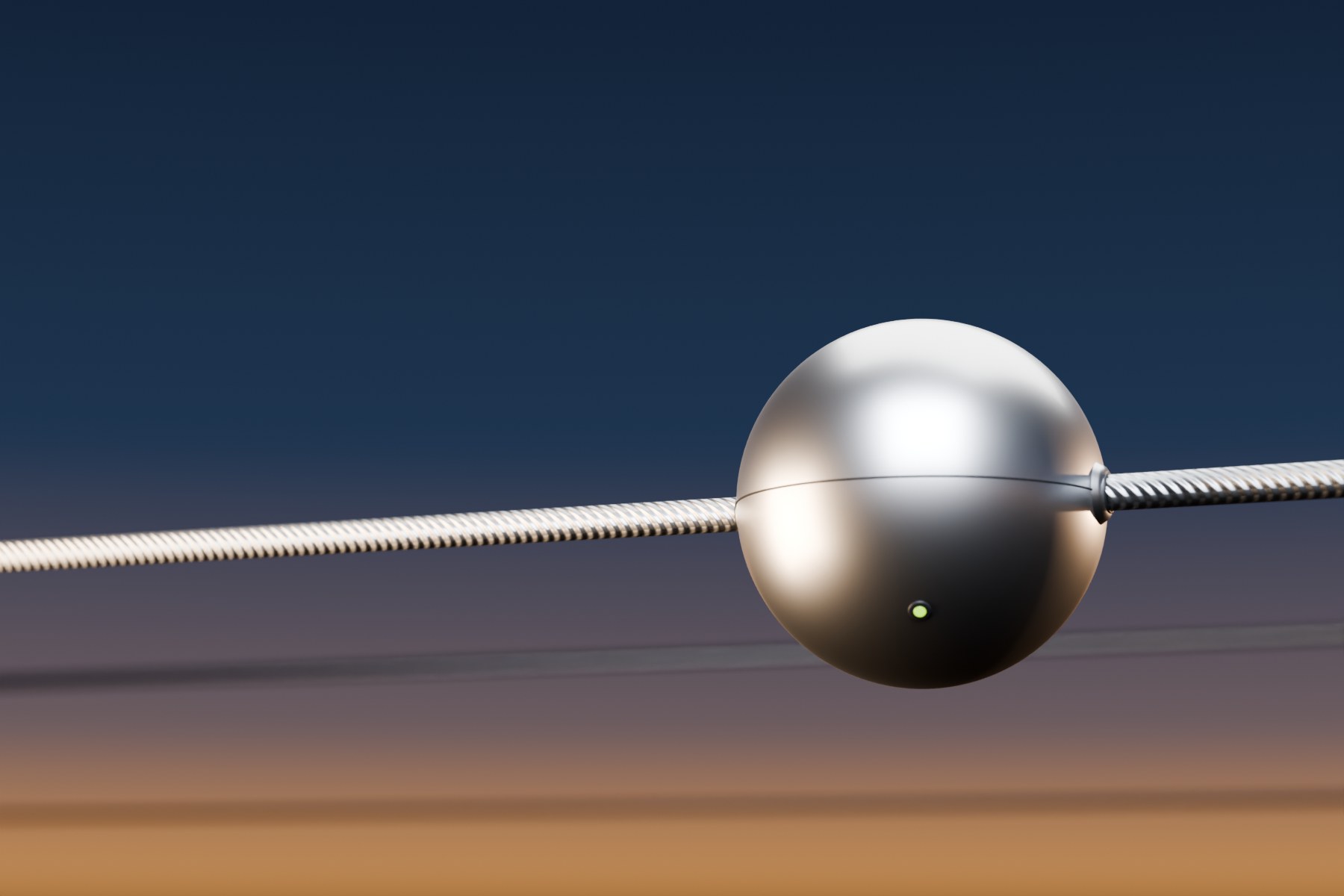
Sensing, power, timing, processing and communication integrated into a single device mounted on the conductor — no outage, no additional infrastructure.
Spherical housing
Geometry designed for high voltage, weather and sealing. Side opening to clamp onto the cable.
Timing and radio
GNSS time for synchronized measurements across distant points. Local radio between phases and long-range uplink.
Embedded processing
Continuous analysis at the edge, with AI models that detect and classify events inside the sensor.
High-fidelity sensing
Current, voltage and fast transients measured directly on the conductor, with event-triggered oscillography.
Conductor mounting
Clamped directly onto the energized cable, at line potential. Measurement is taken on the conductor itself, without opening the circuit.
Energy harvesting
Draws energy from the magnetic field of the current in the cable, powering the sensor and recharging its internal battery.
Internal battery
Keeps the sensor measuring and recording during faults, outages and periods of low line current.
Clamp and installation
Closes and locks onto the cable in a single operation, by drone or hot stick.
Built for the line
Mounted on energized lines by drone or hot stick. No outage, no customer interruption.
Energy harvested from the conductor itself, with a reserve to keep operating during blackouts.
All sensors share the same time base, so events can be compared across points kilometers apart.
Models running on the sensor identify faults, disturbances and anomalies as they happen.
One sensor per phase. The three talk to each other and deliver a complete picture of the point.
Sends information, not raw data. Full oscillography on demand or when an event occurs.
Voltage classes
One architecture, adapted to each voltage class: distribution networks, sub-transmission and extra-high-voltage transmission lines.
Applications
Each application depends on measurements that don't exist outside the substation today. With distributed, synchronized sensors, they become possible.
Pinpoints the faulted section within moments, cutting patrol and restoration time.
Detects downed conductors and vegetation contact that conventional protection misses.
Sags, harmonics, unbalance and transients measured along the entire feeder.
Read the technical noteReal-time visibility of reverse flows and DER impact, point by point.
Real synchronized measurements instead of pseudo-measurements, for precise grid operation.
Read the technical noteRecurring event signatures reveal equipment and connections before they fail.
Differentiator · Latent telemetry with AI
Embedded AI models compress each window of the six waveforms (voltages and currents) into a compact latent representation of just a few bytes, sent over low-bandwidth links such as LoRa or cellular. On the platform, another model reconstructs the waveform, with phase and harmonic content, and delivers the information each application needs.
AI on the sensor
A model running on the device learns to represent electrical behavior compactly.
Latent space
Each measurement window becomes a latent representation of a few bytes instead of thousands of samples.
Low-bandwidth link
A few bytes per window fit long-range, low-power radios.
Reconstruction on the platform
The waveform is rebuilt in the cloud, with direct extraction of phasors, harmonics and events.
In steady state the sensor periodically sends only the latent representation. The platform reconstructs the waveform from it.
Raw samples · 1 window
512 samples × 6 channels × 16 bits = 6,144 bytes
Latent representation · 1 window
≈ 16 bytes
Concept illustration. The byte comparison is representation arithmetic; reconstruction quality is the subject of ongoing research.
AI & optimization
Beyond hardware, we develop machine learning and optimization models for power systems. They work with our sensors, with existing measurements and with the data utilities already have.
AI models that estimate grid state from few measurements and update in real time.
Models trained on oscillography and electromagnetic simulations to identify fault type, cause and location.
Feeder- and point-level forecasts to support operation, energy procurement and planning.
Thermal and weather models that compute real ampacity and unlock transmission margin.
Optimization that decides how many sensors to install and where, reaching the grid observability target at minimum cost.
Continuous grid simulation fed by real measurements to test scenarios before acting in the field.
Platform
Sensors form a layer of synchronized data across the grid. The platform turns that layer into operational information and integrates with the systems utilities already use.
Sensors
One per phase, at each point
Local link
Phases talk to each other
Long range
Cellular or LoRa
G4W Platform
Events, maps and analytics
Your systems
SCADA, ADMS, GIS
R&D and innovation
We take part in R&D and open innovation projects with distribution and transmission utilities. We start from the operational problem and deliver technology validated on the grid.
We start from the operational problem: recurring faults, losses, power quality, line capacity or planning.
Grid models and historical data define the solution: algorithms, required sensors and expected results.
Deployment on real feeders or lines, with sensors, platform and KPIs agreed with your team.
From proof of concept to operation: systems integration, training and continuous model improvement.
Company
G4W is a Brazilian technology company for the power sector. We combine power systems, instrumentation, machine learning and optimization to build the hardware, platforms and algorithms that bring observability and intelligence to the grid.
“The next generation of power grids needs more than sensors. It needs a new observability infrastructure.”
Transform power system observability by democratizing access to high-quality measurements through innovative, accessible and intelligent technologies.
Make it possible to observe, understand and optimize every relevant point of transmission and distribution networks.
Engineering rigor
Physics, simulation and testing behind every decision.
Hardware + software
We build the complete solution: from the sensor on the cable to the software that turns measurements into decisions.
Applied science
Research and close collaboration with academia.
Total cost
We optimize the system, not just the part.
Contact
We work with utilities, transmission operators, research centers and industrial partners.
Talk to us
Tell us about your grid's challenge. We'll reply with a technical conversation.
Send an emailDistribution utilities
R&D projects, open innovation and feeder pilots.
Transmission operators
Line monitoring, DLR and fault location.
Research centers
Joint projects, data and publications.
Manufacturers & integrators
Integrating sensors and platform into existing portfolios.
Investors
Deep tech in critical infrastructure.